Understanding Relationships
RD 9 Trusting Today Can Dilute Some Of Yesterday's Hurt
How renewed trust can loosen the hold of earlier hurt.
Source: Nurturing Hope, Understanding Relationships, May 22 Final The Understanding Conflict Trust - Nurturing Hope - 3 Understanding Relationships.pdf, pages 44-46
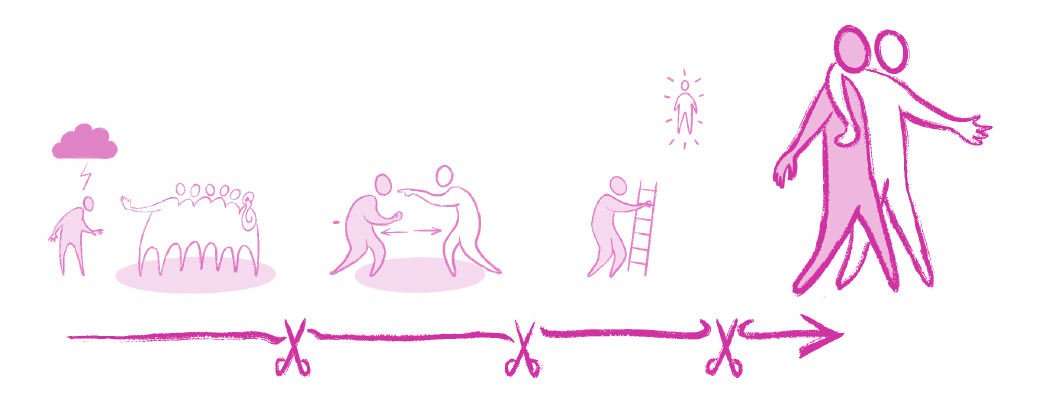
RELATIONSHIP DYNAMIC 9 RD 9: TRUSTING TODAY CAN CUT SOME OF YESTERDAY’S HURT!
The human condition is that we are made from, and shaped by, relationships and the different dynamics associated with them (see all above). In a wish to assist people understand the importance of these relational dynamics we have explored different aspects of four relationship dynamics.
- Scapegoating relationships are when those who can be made different, in some manner, are isolated from the others and made responsible for some unease between members of the group. The scapegoat is no more responsible than anyone else, they are just picked on at a particular moment. ‘All against one’ is the act of the crowd, mob or gang.
- Model-model relationships are relationships that are secure and trusting and model freedom. “I trust you, you reciprocate my trust and vice versa”. Such relationships give us many possibilities to trust and may even give us the ability to forgive.
- Model-rival relationships model increasing levels of mutual rivalry, some that get out of hand and that are very destructive. Each person or group models reciprocated rivalry with the other.
- Model-obstacle relationships are relationship structures where we rival against impossible standards or expectations. Each person or party drives themselves to try, repeatedly, to reach impossible standards of perfection, expectations or achievements, only to fail, becoming frustrated and even depressed.
These different patterns of relationships accumulate in our lives because they are repeated over time. They can leave histories of trust within us and so we model freedom and trust with others as in 1. above.
They can also leave histories of rivalry, disappointment and hurt, even depression and isolation, within us, and so we can be inclined to scapegoating, model-rivalry and model-obstacle relationships in conflict with others. (see above)
The significance of the experience of model-model relationships is that, in the present moment, they bring change into our lives. Such a change, such an experience of freedom, can dissolve or cut some of the harmful and hurtful relationships we have experienced in our past. Over time the power of repeating such hope-filled relational experiences is that these experiences structure and build hope-filled possibilities in us and between us.
Where groups and organisations are populated by people who model freedom and trust, their culture is more likely to be characterised by trust and respect.
RD 9: TRUSTING TODAY CAN CUT SOME OF YESTERDAY’S HURT!
INVITATION
If you feel able to, please make some notes or write a diary entry about how it felt for you being involved in these different dynamics.
REFLECT ON OUR OWN
Using the three hurtful forms of relational models: model-rival, model-obstacle, scapegoating: Identify three relationships in which you were hurt, diminished, put down or driven out.
- What experiences of hurtful rivalry threatened to really diminish you?
Drawing on the discussion about model-model relationships that were open and trusting:
- What happened when a significant person was present and pulled you free of the dynamic of escalating rivalry?
- What impossible dreams were you obsessively caught up in until someone significant plucked you out of this obsessive behavior?
- What times of being bullied or scapegoated in some manner were ended because someone stood with you and dissolved the dynamic?
Find Your Voice
On your own, scope out, in notes or in sentences, some elements of these stories about how significant others gave you new possibilities to live free of these hurts.
Explore Your Reason
Within the space and freedom of that relationship:
- Reflect on how these significant others gave you space to make a new choice and break free of the other relationships, the model- rivals, model-obstacles and scapegoating?
- Was this a surprise for you or did you actively seek these very people out to assist you?
Examine Your Choice
- If you had experiences of cutting or ending old hurts did you make a conscious choice or were you, thankfully, carried away from such hurtful rivalries by the actions of others around you?
- “What would you say” to any of your friends caught up in such destructive relationships?
COLLABORATIVE ACTIVITY
Choose one story you are prepared to share in the group. If we are willing, speak about this experience with another person or in the group you are part of.
- Having heard your own voice and the voices of others, what are you now learning about the experience and potential of such trust-filled relationships?
Summary
Rivalrous relationships draw us in. They erode so many of the gifts and possibilities that exist between us and others when we are open and trusting. Relationships in which informal rules or understandings between people cut rivalry before it gets ‘out of hand’ are important. Such understandings limit the harm people can do to one another.
Uncontrolled rivalry can disrupt our lives and even destroy us. Even if we do not have larger societal limits on what is acceptable and what is not, a relationship with another person who wishes us well, and is not a rival, can cut through our other rivalries and bring us into freedom and new possibilities with others.
Such individual open and trusting relationships can cut through memories of hurt, isolation, loneliness and depression. Such hurtful relationships leave deep memories in us, but dissolved through trust, we can still find the personal freedom to move forward in a new manner.
Such trusting relationships, if continued and repeated, become new foundations for us. In such relationships we gain a deep knowledge that life can be different and that we need not remain at the mercy of old hurts and demeaning relationships. We have the possibility of a future of hope.