Understanding Relationships
RD 6 Unlimited Escalating Rivalry
How escalating conflict consumes difference and relationship.
Source: Nurturing Hope, Understanding Relationships, May 22 Final The Understanding Conflict Trust - Nurturing Hope - 3 Understanding Relationships.pdf, pages 31-34
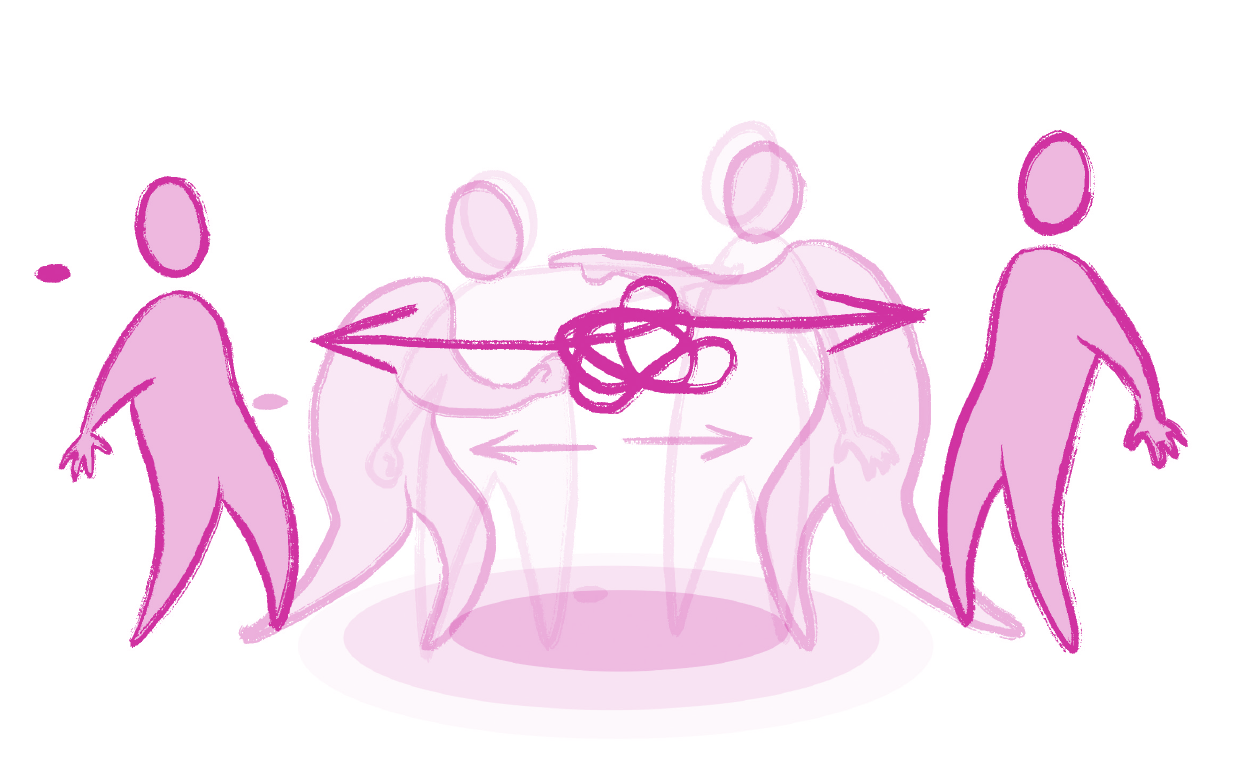
RELATIONSHIP DYNAMIC 6 RD6: CONFLICT ESCALATES, DIFFERENCES ARE USED UP, EACH SEEKS OUR OWN ADVANTAGE
In the escalating fight, all the differences that we each have are used up. The relationship is further polarised. In the end there is nothing but emotional, and sometimes physical, chaos. We quickly move from friend to foe. All differences between us are consumed in our growing desire to win at all costs. Any point there was to our relationship has now disappeared.
Trust, respectful engagement, and relationships are all gone; the ability to express or accept an apology or regret is minimal, even non-existent. Each side is only consumed in using those elements that we sense will allow us to beat, and even destroy, the other. When rivalry escalates beyond agreed boundaries, we really want to win, no matter the cost to the other and ourselves.
At the emotional height of a conflict it is hard to see, much less anticipate the consequences. Any options for de-escalation are rarely sought or considered. We may even, often unwittingly, be prepared to accept the destruction of the other.
INVITATION
If you feel able to, please make some notes or write a longer diary type entry about how being involved in this ‘unlimited escalating rivalry’ made you feel.
REFLECT ON YOUR OWN
Looking Back
- Can you recall a situation of unlimited escalating rivalry where it became very tense and had the potential to be destructive of you and someone other?
- Can you bring to mind the stages of the escalating conflict? How was it that it seemed impossible to prevent matters from getting worse?
- What were the costs for each party?
- Are there still lingering costs as a result of this rivalry?
- What were your emotions and experiences of this time of unlimited rivalry?
- What is now the nature of the relationship between the rivalling parties?
- What respect, if any, remains?
Looking Forward
- Who or what might assist the different parties in coming together again?
- What would it take? Or does it appear that all is lost?
Find Your Voice
On your own or working with another person:
- Can you recall getting caught up in such an unlimited escalating rivalry?
- With hindsight, what would have needed to happen to stop the escalation?
- Who were the on-lookers or people on the sidelines? Did they take sides or try to prevent it?
- If people tried nothing, what appeared to be their reasons for not acting? What did the experience do to you or your relationship with your group?
- Looking back on what happened, what are your feelings now?
- What do you imagine the feelings of the other person or rivalling group members to be?
- What costs, if any, did the escalating rivalry have:
- on you, on your well-being?
- on that of your rival(s)?
In unlimited and escalating rivalry each person or rival group seeks whatever will give them the advantage and winning edge. Former relationships are worth little if anything now.
Explore Your Reason
Were there any good reasons that this rivalry took off? What prevented the possibility of restraint as the rivalry escalated? What restraint(s) might have worked? What other ways might there have been to deal with the conflict between the parties?
Examine Your Choice
- Looking back what other choices were open to you in this escalating conflict, if any?
- Could you have prevented the unlimited escalating rivalry?
- What agreements, values, structures existed, if any, that could have been appealed to?
- How was it that they were not used?
COLLABORATIVE ACTIVITY
Share your thoughts about the themes above with another person or in the group of which you are part.
- Hearing your own voice and the voices of others, what are you now learning about the experience and potential of restoring such relationships?
- How do the choices that escalated the rivalry continue to impact the participants today?
- With hindsight, how might people have made different choices?
- What restraints might you and others now put in place to prevent similar escalations occurring?
- Is having friends around you a help or hindrance in preventing such an escalation?
- What agreements might you make with friends on a future occasion?
Summary
There are often physical, emotional, and mental well-being costs to escalating conflict. In the wake of shattered relationships and diminished dignity, harsh memories of hurt - whether acknowledged or not - remain. The way back to each other is often only when we risk the pain of meeting together and being open to a new possibility with each other. Potentially restorative and healing processes do not come easily or without risk.
At a societal level, unfortunately the dominant mental models for addressing conflict are often more associated with punitive traditions and practices. Often these are inadequate and heal little. Looking back did people believe the relationships structures were dead and unable to be restored? If so, people had no hope! However if people were more hope filled, they would have seen possibilities to establish new relationships or restore or reinvigorate the old ones.
Restorative practices that promote healing and re-establish openness between hurting rivals are often not, as yet, part of mainstream cultures. However it is important to know that they do work and there is a body of knowledge and experiencevi on this now! Do we punish, or do we reconcile, without diminishing the hurt and harm caused? Such rivalries challenge us. Are we open to some reconciling, healing actions or are we too readily wedded to harsh punishment of the other as our preferred wayvii?
Alan Jenkins defines restorative actions as giving new strength or vigour, something new, something better and healthier. He suggests it is about a revitalisation of new possibilities that might develop. Restorative is future centred, something creative and productive. ANZJFT Volume 27 Number 3 2006 pp. 153-162