Understanding Relationships
RD 5 Escalating Rivalry Beyond Acknowledged Boundaries
How rivalry begins to shrink the shared space between people.
Source: Nurturing Hope, Understanding Relationships, May 22 Final The Understanding Conflict Trust - Nurturing Hope - 3 Understanding Relationships.pdf, pages 27-30
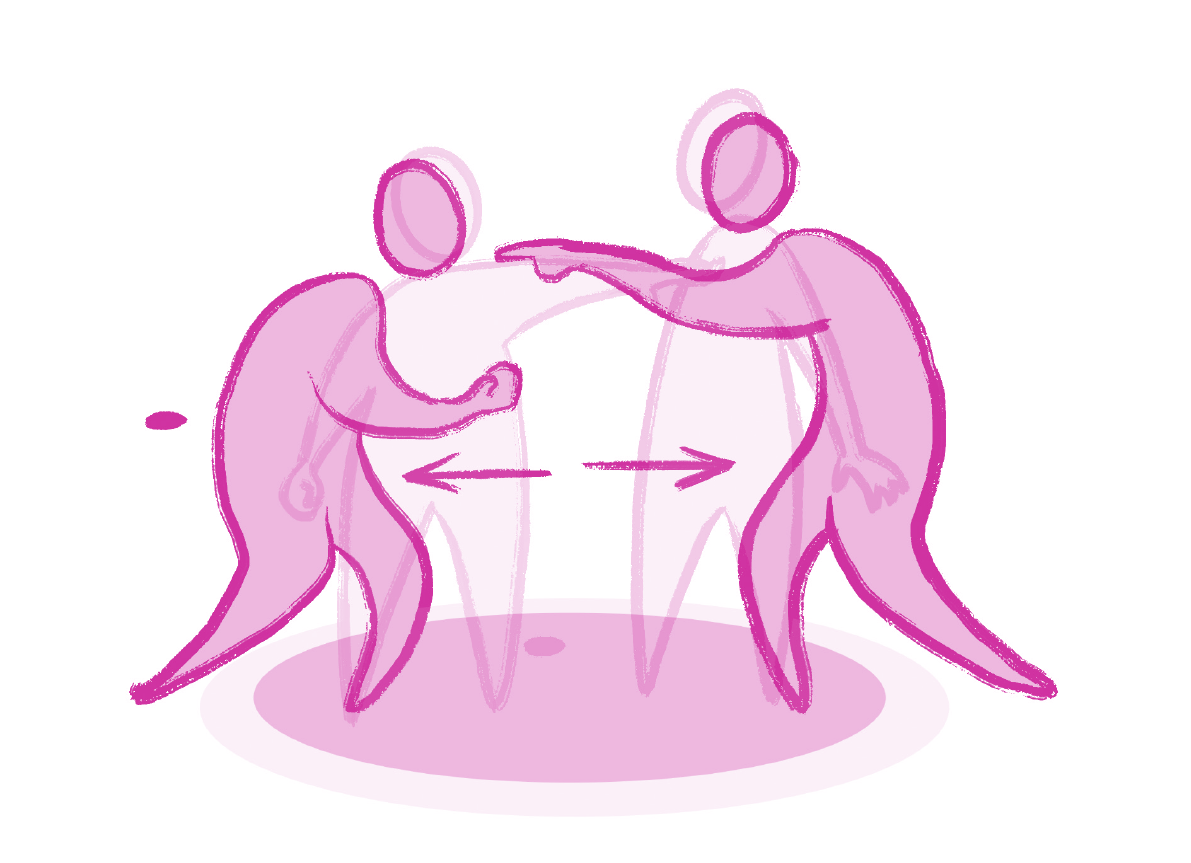
RELATIONSHIP DYNAMIC 5 RD5: ESCALATING RIVALRY BEYOND ACKNOWLEDGED BOUNDARIES
When relationships are secure the differences we bring to them nurture the physical and emotional space between us. Such relationships are rich and varied and, as we saw above, enable people to negotiate rivalries within boundaries and limits. We contribute our different interests and abilities and find possibilities to be more creative and inventive together when we experience security with others.
In secure relationships diverse views, interests and even competing aspirations can be expressed and explored. The space we make for each other is a rich one because it is one in which we are welcome and meet one another in freedom.
As each side seeks to win, any point or purpose to the relationship fades away.
When rivalry grows beyond established boundaries and rules, the creative and emotional space between people begins to shrink. As the rivalry increases we seek to use whatever we have to gain an advantage. With each escalation, we increasingly dehumanise each other. Different abilities and talents we once shared are weaponised and destroyed as we use them to seek our own advantage. In the early stages of escalating rivalry there is still a strong possibility that “we will catch ourselves on” and regain the freedom of the old relationship. An apology, a mutual acknowledgement of our futility, or laughter can break the escalating dynamic of rivalry. Now we will explore what happens if such breaks in the escalating rivalry are not established. If you feel able to, please make some notes or write a longer diary type entry about how being involved in a rivalry that escalated beyond acknowledged boundaries made you feel.
REFLECT ON YOUR OWN
As you look at this model in which rivalry escalates beyond acknowledged boundaries, consider these questions.
- Can you recall a relationship where, quite quickly, order or balance began to disappear, and you found yourself embroiled in escalating rivalry?
- Can you bring to mind the beginning stages of the rivalry?
- Was it unexpected or did you feel the tension growing for some moments or a period of time?
- How did it escalate without you or the other party/group naming what was happening and seeking to have the issue addressed between the parties? What did you feel as the rivalry escalated?
- What were the first salvos between those experiencing escalating rivalry?
- What differences did you or the other party use to try to assert your superiority?
- Which positions, beliefs, or achievements did you or they use?
Did this escalation continue or were there any restraints applied to curb it?
- What brakes were exerted, and by whom?
- What led you or the other party to listen to the person/people applying the brakes, or not?
- What possibilities did you see for stopping the escalation, if any?
Find Your Voice
On your own or working with another person: Please share your responses to this relationship structure with another person in our group.
- As the situation escalated what did you feel?
- Was it a surprise or were there earlier warning signs, if they had been acknowledged?
- How did it end?
- How did you feel then; how do you feel now?
- What were the relationship costs, if any?
Explore Your Reason
Explore from your own and your opponents’ perspectives the ‘good reasons’ each of you asserted for being involved in this rivalry.
- With hindsight, how do you feel about these ‘good reasons’ now?
- What did the rivalry cost each party?
- What legacy remained, and may still remain, for all parties?
- Looking back, what did you want that the other party possessed?
- What did they want that you possessed?
- In the end, what was it all about?
Examine Your Choice
- Did either of you make a choice to retire from the rivalry but were unable to get free?
- With the benefit of hindsight, was your choice a reasoned one or was it fueled by heightened emotion and the rivalry?
- Looking back, what were the merits of the other person’s, or group’s, arguments?
- If you were successful in ending the rivalry, what has it meant for your relationship now?
- What stated or implicit rules now apply between you all when you engage with one another?
- If this rivalry further escalated to a hurtful stage, what has been the long-term legacy?
- If it didn’t escalate, what does this rivalry now mean for you and the other party involved?
COLLABORATIVE ACTIVITY
- If you are willing now, can you speak about the themes above with another person or the group of which you are a part?
- Hearing our own voice and the voices of others, what are you now learning about the experience and potential of relationships where rivalry escalates beyond acknowledged boundaries?
Summary
Even when we are in open and trusting relationships, rivalry can sometimes, in a flash, escalate between us. As it increases, we lose our ability to see the other human being as a person. Distance grows between us, and we increasingly use positions, possessions or attributes to our own benefit. We seek to destroy any claim that the other party might wish to make on them. While the other person/party may have been in a long-term relationship with us, it can be destroyed in a moment as we seek to win at all costs.