Dynamics for Hope
DH 7 Shared Rituals
How shared rituals renew belonging and help different people come together.
Source: Nurturing Hope, Dynamics for Hope, May 22 Final The Understanding Conflict Trust - Nurturing Hope - 5 Dynamics for Hope.pdf, pages 72-78
DYNAMICS FOR HOPE 7 DH 7: SHARED RITUALS: WE ARE ALL TOGETHER AND DIFFERENT
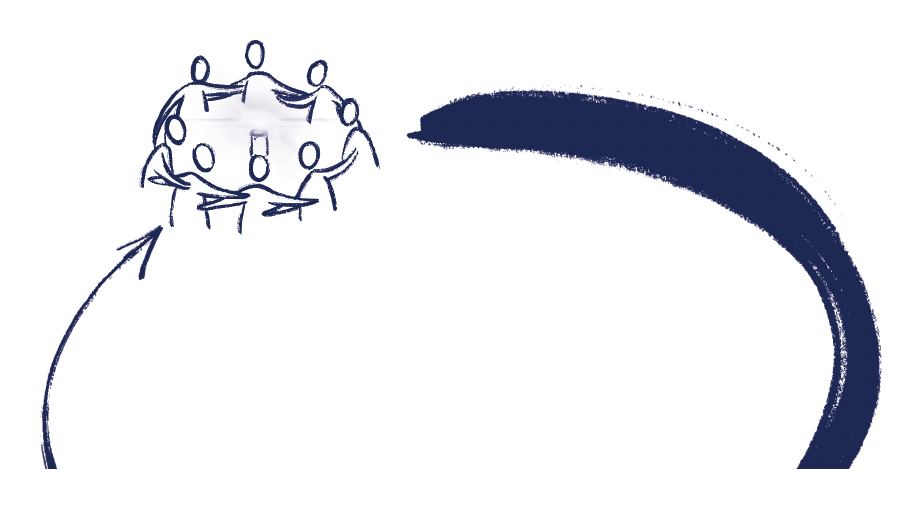
What is a ritual? In a ritual, for a moment, different people sharing something in common become one. In the ritual people are united through words, actions and commitments shared. In long established rituals those alive today* are linked with people who have lived before**. Rituals usually occur at designated times and usually at familiar places within a family, sporting, or cultural cycle of remembrance. In the ritual, a common belonging and identity is re-established at a moment in time.
People then disperse until the ritual time comes round again! Rituals can be abused to scapegoat others by reinforcing the exclusive identity of the group. But, when it works well, ritual events strengthen the identity bonds between the members and end with all dispersing, free to get on with the rest of their lives. In secure societies people move on, not worrying about their identity. * Spatial Mimesis ** Temporal Mimesis
Established Rituals give shape and order to life. In rituals: we do things in a certain order and we bring to mind our common histories. we remember one another at different times, often annually. we shake hands, or hug, salute or wave to make all welcome. we do things together, eating meals, sharing old stories, telling old jokes, singing old songs, sharing certain forms of words, greetings or prayers. In old cultures, there are elaborate ‘rites of passage’ rituals we can benefit from examining.
For example forms of peacemaking: sharing a ‘peace pipe’, welcoming circles; talking sticks; rituals of remorse and feasts. Rituals In Conflict Affected Cultures and Societies. The differences between people in conflict-affected cultures and societies are not necessarily individual. However the cultural or identity differences, for all, are often defined by the boundaries around the competing rituals, setting one group apart from the others.
As an example, in the 1960’s when young people, especially those from working class backgrounds, fell in love across the opposed traditions in Northern Ireland, they often faced emotional intimidation and even physical threatl. Their individual experiences and wishes were not culturally permitted! In Northern Ireland then, a new ritual of solidarity was developed by some courageous adults and clergy, affirming the wish of people from different religious and cultural backgrounds to establish what were then called ‘mixed marriages’li.
Some old rituals perpetuate fear in ‘the other’ . In conflict affected cultures and societies, the rituals of the opposed groups often involve identifying ‘the other group’, ritualising them being dominated, beaten or scapegoated. Thus rituals in conflict affected cultures and societies are often both rallying points for the members of one tradition or group to come together, and times where people from other excluded traditions or groups feel uneasy.
The ‘other groups’ understand they are deliberately diminished and demeaned, the scapegoat. Although this is not often recognised by those participating in the ritual, it is felt deeply by those on the outside. Instead of resolving tensions, rituals in a conflict-affected society may divide people further, becoming points of potential tension and violence.
As people increasingly discover that many old rituals do not acknowledge different others or worse, and are often celebrated at their expense, if people are to practically ‘nurture hope’ there is a challenge to create new events which, if repeated, can become new, more inclusive, rituals. One way for people from historically conflicting traditions wishing to signal their commitment to build new and different ways of living together, is to establish some new rituals.
The Search for new Rituals: More Rituals in Common As some local communities and many regions become more diverse, it is important that we find new ways to come together in our differences developing: rituals of celebration; rituals acknowledging our life together with different others; new rituals between diverse faith traditions; and rituals of inclusive citizenship.
To move beyond conflict, for example after a peace agreement, means that people from historically opposed traditions and identities find new rituals expressing their new belonging together. It also is an opportunity for the historically opposed groups, now with some distance from the conflict, to find new ways to sensitively examine and understand, together and anew, their earlier conflicted histories and the rituals associated with them.
In societies moving beyond conflict, any new inclusive rituals, where ‘different others’ come together, however small, are significant. This is what we mean by inclusion: finding contexts in which everyone knows, beyond doubt, that everyone belongs, and all accept the duties and rights that go with that belonging. Small inclusive experiences are fragile yet important, post conflict Inclusive ritual events signal a wish for a new and different way of living together around a common act of belonging.
Such rituals probably have to develop in small ways. For example, even now, a proposallii to annually acknowledge all those killed in the conflict in Northern Ireland, on the longest day, the 21 June, is still not a universal and inclusive societal ritual! Small examples grow around people coming together in new cross-connecting groups around addressing social issues such as domestic abuse, poverty, and challenging cultures that groom young people for violence.
Other examples grow when people from diverse traditions come together to celebrate the lives of people who have worked for the common good, locally and internationally.
Further examples in Northern Ireland are: people from historically conflicting traditions coming together to establish a new, shared institution such as an integrated school. people from diverse backgrounds and traditions coming together to support women and children in abusive relationships such as Women’s Aid. people with different sexual orientations standing together after violent actions against people of a specific orientation.
a number of cross connecting rituals between people from different sporting traditions; local inter-denominational and inter- faith projects; and people setting up different community arts programmes and festivals that are explicit about their commitment to heal divisions, recruiting participants from all backgrounds. When people from a specific generation bring others from different generations into more inclusive events, patterns and structures become embedded.
It is our experience that, in such initial small steps, people develop new rituals that unite. Rituals of Social Inclusion Initiatives such as those above, and more, bring previously separated people into relationships where they acknowledge one another and express their collective hopes. Once acknowledged, there is no going back to the old way of exclusion. These rituals signal new ways of being together, and, in these new ways, including becomes our only possibility.
Through such experiences and rituals, our assumptions about what some people believe about the impossibility of ‘living together in difference’ dissolves and the future opens. We are no longer isolated. Such rituals carry us, connect us and embed new ways of living together.
DH 7: SHARED RITUALS: WE ARE ALL TOGETHER AND DIFFERENT:
INVITATION
If you wish, please scribble some notes or write a diary note about your experience of a ritual and how this benefitted you.
REFLECT ON OUR OWN
If you have had a relatively happy ‘family’ or ‘cared for’ history: Think back to a recent happy celebration in a ‘family’ or ‘cared for’ circle, and call to mind the experience of being together. OR If family has not been such a positive experience, as is the case for some people: Think back to an experience with friends, sports colleagues, people in your local community or work colleagues whom you enjoy being with.
OR If you belong to a faith community, a trade union or civil society organisation: think back to a ritual associated with this community. What brought you together? Was it a celebration? An annual event? Was the form of the event like other years? Did certain people, or people with certain titles in the organisation, take on certain roles? Did most, if not all people know their place in the event? How were new people or younger members inducted into the ritual?
Coming to meet people at the ritual event: Were there some people you had not seen since the last event? Were there others with whom you had contact outside this ritual, on a daily, weekly or monthly basis? Did you talk excitedly with some before the event? Were there any surprises? Were there any people specially singled out for attention, honour or remembering?
Find Your Voice
What did it feel like to be part of this wide group? Thinking back to the event: Who had to be there to ensure the event happened? What was said, if anything, about those unable to attend? Were people disappointed by some not attending, or did people understand they had good reason for not coming?
What elements of the ritual were repeated together, as before? Were similar songs sung, speeches made, blessings given or toasts or prayers said? How did the ritual end? Were dates set for the next event or was it just assumed when it would happen? What did you feel when the ritual ended and people dispersed?
Explore Your Reason
What good reasons would you put forward for all family members or members of groups that are important to you, to make an effort to remember birthdays? How important is it for all to attend birthday parties or similar events? How have you felt when you were unable to attend an important ritual- A Birthday, A Wedding, A Party, A Celebration, A Funeral, etc? For what good reasons do you think rituals came into existence? Good rituals establish common membership.
For example rituals at times such as Diwali, Juneteenth, Thanksgiving, Hannukah, Christmas, Eid, ML King Day, can give cause for people to place their differences to the side, because they all belong together. When rituals become forced or when ‘a common sense’ is breaking down. In families and communities where people do not actively work to develop relationships between people throughout the year, some rituals do not work well.
As time passes, for some, the need or value of rituals can seem to slip away and people only come reluctantly. Have you any experience of such ‘empty’ rituals? Have you or others revived them successfully or was it best to let them die?
Examine Your Choice
Imagine you are a senior member of a family or friendship group or organisation: what rituals would you try to ensure continued? when would you be prepared to suggest that certain rituals had passed their sell by date and should be stopped? Imagine you are a younger member of a group with a ritual: how easy would it be to raise questions about the value and usefulness of the ritual continuing, if you felt so?
COLLABORATIVE ACTIVITY
If you are willing now, speak about the themes above with another person or in the group you are part of. Being together, what are you now learning about the experience and potential of rituals? How do good rituals contribute to your sense of belonging and well- being? Looking at the need to nurture hope and bring people from different experiences, talents and abilities together to work for the common good locally:
-
What opportunities do you now see to create some new rituals?
-
How able do you feel to do this yourself?
-
Who else would you invite to create such experiences together?
Summary
When rituals work well: people come, participate and go on their way having had a great time together without thinking about it; those involved know that their ‘belonging together’ comes before other different and opposed beliefs and positions they might have; through the ritual, people, even those with very opposed views, might experience that belonging together renews their relationships, and assists them gain a renewed balance and commitment to one another; those who at other times are quiet, or unsure of their place, can feel included.
In a sense, people find their voice through participating in all that goes on around them. Many rituals associated with conflict-affected societies do not join people together but deepen divisions. As our societies change, the need to make new, more inclusive rituals grow. People in societies emerging from conflict need to patiently, and deliberately, create new events that model a new spirit and hope between people from opposed traditions. Only in such a spirit will newcomers find a place.
If you have come into the society recently, what invitations and rituals might you develop, with others, so that a new sense of belonging can be developed? What obstacles to making this gesture do you face? The vision behind ‘Nurturing Hope’ is that the small steps of people meeting and working together on issues we often are silent about are important. Such steps contribute to the building of new patterns of meeting and new relationships.
In these small meetings, new rituals begin to evolve between us that transcend fear and distrust. In addition, the willingness to address the different and often competing religious, cultural and political perspectives between different people, through such meetings, will, in themselves, become new rituals.