Dynamics for Hope
DH 3 We Are More Than Our Beliefs
How people can meet beyond fixed beliefs, sacred positions, and inherited labels.
Source: Nurturing Hope, Dynamics for Hope, May 22 Final The Understanding Conflict Trust - Nurturing Hope - 5 Dynamics for Hope.pdf, pages 21-36
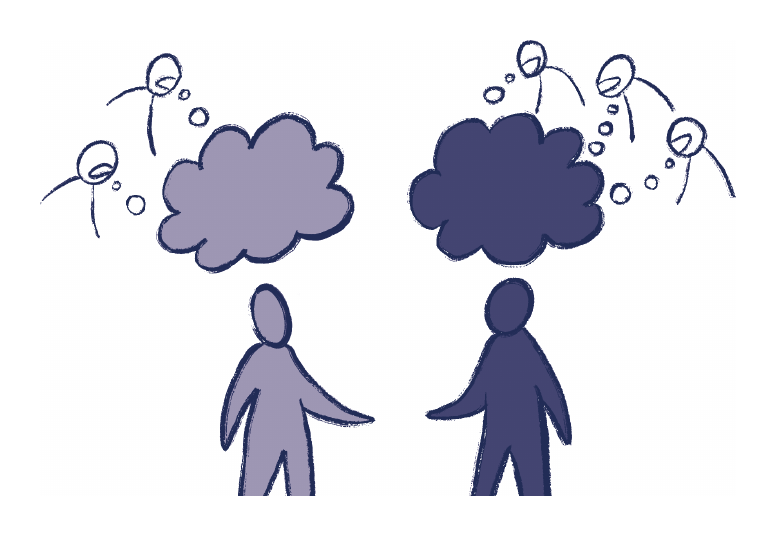
DYNAMICS FOR HOPE 3 DH 3: “WE ARE MORE THAN OUR BELIEFS”
“We are more than our beliefs!” is a fundamental understanding that has underpinned reconciliation practices through many years of both difficult and hope filled times in Northern Ireland. Firstly working in a society where sacred beliefs and unbargainable positions have shaped many people and events, the deep knowledge carried in the term ‘we are more than our beliefs” has still enabled many people to reach out to to people with very opposed beliefs.
Such actions have established respectful relationships through which people have engaged and often agreed to meet further, engaging in some common projects. Secondly we need to continually reflect on whether we believe that in new relationships of trust and respect people change? This understanding is relevant to formal and informal educators as well as community workers working with young people and adults who have come to believe themselves to be worthless, problems, incapable or weak through taking on the rejections of others.
Such workers and volunteers offer relationships and structures in which people come to see themselves as more than their
beliefs- people of value, talent and ability yet to be released. Thirdly there are some people fortunate to have been brought up within expansive and inclusive beliefs who, when they come together are able to create programmes or projects way beyond anything they had believed possible. Each of the following three models, will address these themes. Transcendence A transcendence is an umbrella that gives us protection, cover and strength. When we know with our being that we belong together we can disagree without worrying.
In such open relationships, no matter how much we disagree, our sense of belonging together cannot be taken away. We learn that, together, we are more than any differing beliefs between us! This is what happens when we live together under, or with, a ‘transcendence’.
Some examples of transcendence are: people having friendships that transcend all the difficulties they face; people having a deep sense of family, ‘belonging together’ they know this togetherness cannot be destroyed; and others still, with a collective history of working together across lines of community difference, know that the transcendence of ‘working in common’ will pull them all forward together, whatever the setbacks!
To meet together on an individual basis means that, instead of meeting as representatives of excluding groups, we meet together in our frailty, speaking openly together about ourselves and listening deeply to one another. In the human encounters people have when they work alongside one another, share meals, walk together, it is possible that new relationships can form that are stronger than any differences of belief.
In our experience, people who may previously have experienced one another as enemies can have experiences of sharing their different life experiences, beliefs, hopes and fears. In such encounters people experience that relationships beyond sacred hostile beliefs are possible. There is a deep wisdom in the term “we are more than our beliefs”. We find a relationship with each other, then we work through our different beliefs.
Building relationships between people holding very opposed beliefs is a central reconcilliation task, Martin Luther King insisted: “People fail to get along with others because they fear each other; they fear each other because they do not know each other; they don’t know each other because they have not communicated with each other” N Richardson, Some Features of Education in Northern Ireland, Corrymeela, 2021.
Such a fundamental belief enables us to facilitate respectful relationships through which we all engage beyond our fears and suspicions, and often agree to meet together and work further on some common projects. In relationships where each one of us has our place as of right, where there is space to meet others who differ from us in history, belief, culture or experience, human solidarity can develop between us. In such relationships we might find and share common experiences:
-
of diverse family situations that are part of each one of us from our childhood;
-
of having a disability; of being left alone and unsure;
-
of being cared for when sick;
-
humorous events;
-
celebrations
-
and successes. In these open and vulnerable atmospheres we have room to explore our own beliefs and listen to one another with respect, reflecting on what the other’s experience means for us. To foster hope is to create relational spaces between people in the belief that, where there is no rivalry, we can experience openness and trust. Even in new and tenuous relationships we can have robust agreements and disagreements and still work for a future together. To experience such relationships is to nurture hope. We explore three different dimensions of “we are more than our beliefs”: 3.1 we are more than our sacred beliefs (or red lines); 3.2 we are more than the demeaning beliefs others have of us and: 3.3 together we can do more than alone with our individual beliefs.
DYNAMICS FOR HOPE 3 DH 3.1: WE ARE MORE THAN OUR SACRED BELIEFS (OR RED LINES)!
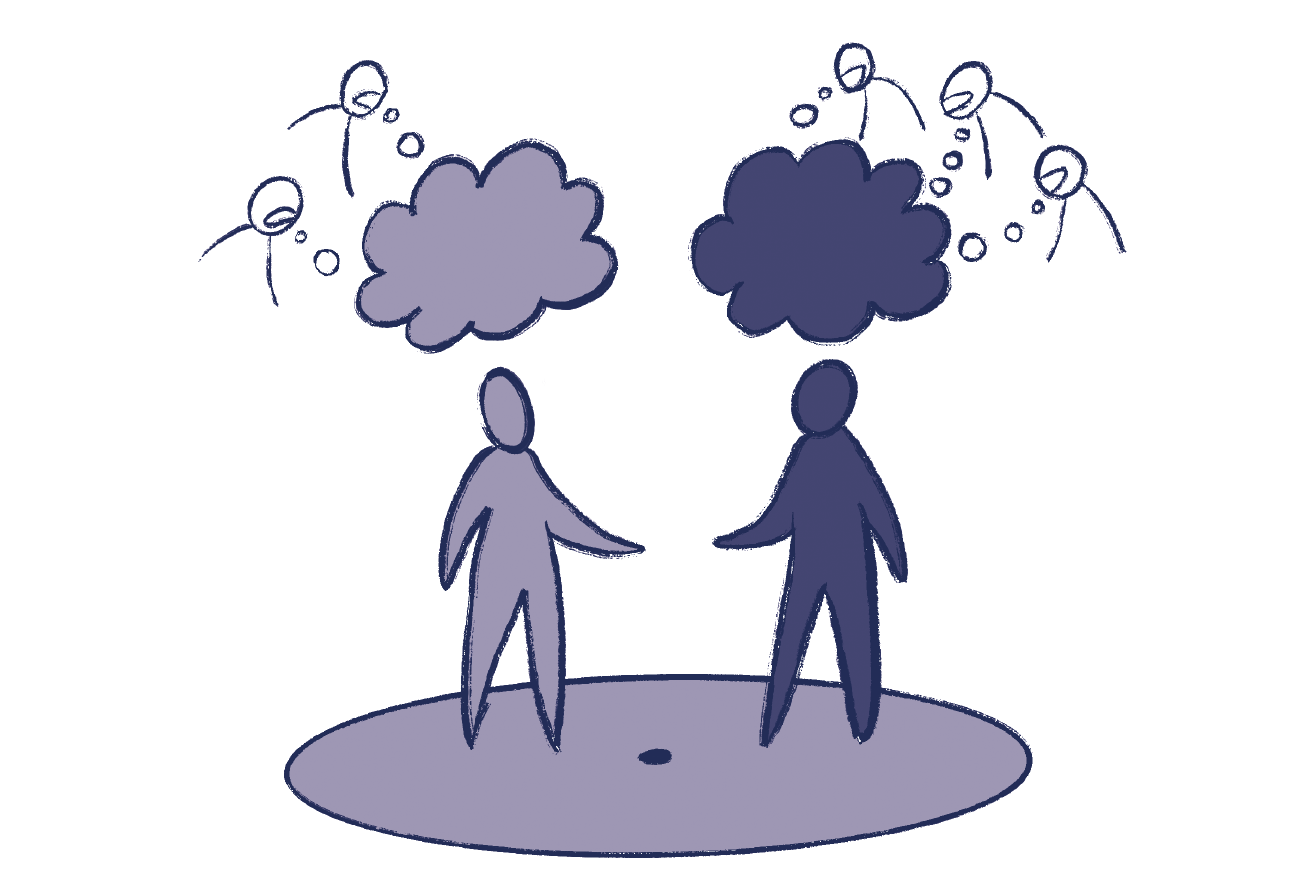
Hope and change When we only know one another through conflict, it is difficult to value the other. When we establish ‘sacred positions or beliefs’, presenting them as absolutes or unbargainable positions, we generate model- obstacles (See RD8). There are no ways that others can engage with us unless they totally accept our beliefs. In the absence of a relationship we demand it is “our way or no way”! Moving beyond fixed positions?
In a practical sense one way to explore whether it is possible to break this dynamic is to have all come into a space no-one is familiar with, a space that no side owns! In such a space it is possible that we can learn to live together respectfully. When people share meals together and share some personal experiences or go on walks together, potentially, but not always, previously opposed people sometimes find unexpected common interests and unexpected connections, even common ground.
Of course such events for large groups will need preparatory work! As long as the intentions are honourable, with no manipulation, but people openly and honestly taking the risk of meeting one another, such meetings can become small experiences of change. In such new, more open relationships, people can experience there are other sides to the ‘other people’; there are different dimensions to life; there are joys and hopes to share with the other.
New relationships can create space between people, enabling people to carry one another and hear one another, gaining insight into their different and even opposed views. ‘In my own personal history I was born at different times and in different places to you; I lived with different people. I had different relationships with my brothers, sisters, cousins and other relatives to all other people around me. I learnt to walk, talk and think through meeting and being with a whole range of people.
In my home and community around me there were many different types and conditions of people, some able bodied; some with learning disabilities; some lonely people, some funny people, some characters. In my life I have experiences of being an infant, a child, an adolescent and perhaps even an adult-these all carry different memories for me and make me different. In the people I have met and the places I have frequented and the views I have heard and agreed with, or argued against, I am different to all others too.’
An Example: Before the emergence of the Civil Rights Campaign in the 1960s in Northern Ireland, locally elected councils, dominated by polarised and antagonistic political groups, allocated public housing. The allocation of public housing was a critical area where political power in favour of ‘your own’ was often exercised. We were sitting together with a group of councillors from all political parties. At this time, political positions were very fixed, non-negotiable and sacred, and we were together in a private space!
We were in an open circle reflecting together, when one local councillor suddenly spoke. ” I want to say something to you. Many years ago, I voted along party lines and kept a family out of a house which they should have been allocated. Being here together with you all now, I regret that action. I wish I had had the courage of my own convictions then and not followed the party line!” In itself this was a remarkable thing to say, risking the ire of those from his own tradition and party.
Spoken out of the blue, without conditions, without pressure, this was a surprising break in decades old patterns of silences and traditional ways of thinking and actingxxiii. Everyone in the room knew, for this moment, they were in a new, shared space and no one knew where to look or what to say. There was a deep silence; they knew a deep cultural taboo had been broken and they were in uncharted territory. This person had told a story that acknowledged how destructive many old ways were- he offered
a gift of regret and a space for a deeper engagement between them all, if they chose to enter that space. After a moment a councillor from an opposed party spoke to the first councillor. ” Hearing you, I am moved to speak too. We are all getting on in years, and I too have regrets.
I regret that before entering politics I took part in actions where there was pain and hurt, for which I am now very sorry” The members of this group had moved into a new space of their own making, a space of surprises where all learned something new and where all moved forward, for a moment, on a shared journey. These experiences, told as stories, might only be small shafts of light piercing a dark landscape, soon to be snuffed out.
However they are also stories of contrast that opened up new possibilities then, if people chose to exercise new choices. The weight of habit might still dissolve or minimise the creative power of such small steps but these experiences are still real spaces in which people experienced finding a new voice. Through an expression of regret, others were freed to take risks and break free of unhealthy patterns that were once culturally taken ‘for granted’, and were now overturned.
The unexpected story telling space allowed people to speak and hear previously forbidden stories. Paradoxically nothing was said that was not already known within each tradition, but now it was a new shared reality in the diverse group. One person took a risk that opened each to the other in an unexpected manner. This act allowed everyone present to exercise a new choice, to choose to enter into new relationships with one another and create embryonic new structures, new ways of being together.
This is not a claim that all of politics changed from then on. That is something entirely different. However it was an experience, in that moment, that existential change was not a fantasy but a human possibility. For a moment, it changed the ways we were together and gave reality to a wider hope. Such individual experiences of change have the potential to carry people to the next possibility, even if it does not itself lead to a breakthrough. Such individual experiences make despair impossible.
There is no simple way in which any single event changes everything, but change is catalysed by such moments that become the basis for a new ‘mimetic reality’, without which nothing really new, that might eventually lead us to trust one another, will be established. Such experiences are the hope that a new world together is imaginable.
DH 3.1: “WE ARE MORE THAN OUR SACRED BELIEFS (OR RED LINES!)”
Beyond Beliefs, Sacred and Unchangeable
INVITATION
If you wish make some notes or write a longer diary type entry about your experiences and thoughts about ’ we are more than our sacred beliefs?’
REFLECT ON YOUR OWN
Bring to mind an experience of being with another person, where you or they insisted that because of holding certain beliefs the relationship could not go any further! OR if you cannot recall such an experience: Find some deep belief of your own that you have had to defend in the face of others!
Find Your Voice
Whatever experience you are recalling, what did you experience? Did the encounter escalate or end in a stand off? Did anyone break the tension with a joke or laughter or a “can we catch ourselves on here?” statement and find a way to meet together again? What legacy, if any, did this incident leave between you all? Trying to change ‘deeply held beliefs’ is an intensely narrow, emotionally draining space! However it may be important that people have some ‘deeply held beliefs’!
In addition to some of the different political, religious or cultural groups you belong to, think about the other important affiliations or memberships you have? You may be a tradesperson or professional working to standards you will not dilute. Your native language may be different to the majority language in your locality and you may feel deeply about your right to be heard. You may have an identity that is not recognised and respected. You may have a sporting loyalty to a team or area, where the rivalry is intense.
Explore Your Reason
Each one of us may have some deeply held beliefs. Do we ever meet (have we ever met) situations where we would rather withdraw from company than continue because our beliefs have been dismissed? The cost of withdrawing may be that we become (became) isolated: is that or has that been a cost worth bearing? What price have you paid for maintaining these beliefs, if any?
Examine Your Choice
From birth we are made out of so many different relationships and experiences. Some of our beliefs evolve from these experiences; other beliefs have developed with people we trust or see as important for us. Do you still have some relationships with people who disagree fundamentally with some of the beliefs you have? If so, what keeps you together? Did you once have some relationships with others that are now ended because of a disagreement over some fundamental or sacred beliefs? In light of the statement “we are more than our beliefs” what would need to happen to allow you to meet and work together with them again? xxiv
COLLABORATIVE ACTIVITY
If you are willing now, speak about this theme with another person or in the group you are part of. Are there any ‘sacred beliefs’ that are important to you? If so, what is it like to raise these beliefs in wider company? If not and you are a person who does not have ‘sacred beliefs’: Do you find it easier to mix with others, or is it that you just are not sure of what you believe in? Have you ever experienced a relationship being re-established between you and others where, originally, you had fallen out over a sacred belief? If so, what difference has that made? If not, what are the stumbling blocks to this relationship being possible again?
Summary
Conflicts, which escalate into rivalries over sacred beliefs, destroy the relational space between us to meet together. If we start by trading our beliefs, we might end up by trading our fists and more. As conflict escalates, the rivalry between us destroys any space left between us in which to meet as human beings and to change. Instead we defend, aware of our wounds and justifying our wounding of ‘them’. In such conflicts we reduce one another to ‘cyphers of core beliefs’ alone, symbols of things we fear and seek to destroy.
When people and groups take the step of meeting those they have been fearful of, they create the possibility of coming into a new relationship where the other is not an enemy but a partner. In terms of the earlier relationship models this means leaving relationships where we are rivals or obstacles to one another (see model-rival or model- obstacle) to ones where we learn from, and support, one another (model-model relationships).
In relationships where we meet as people, we can experience that no human person can be reduced to a single ‘belief’. In meetings where all are welcome, we find reflective atmospheres where we can listen to one another.
DYNAMICS FOR HOPE 3.2 DYNAMIC 3.2 “WE ARE MORE THAN THE DEMEANING BELIEFS OTHERS HAVE OF US”
Commenting on modern life, Baumanxxv speaks about modern society promoting ‘modern day achievers’ . For him, modern societies are becoming relationally impoverished places that desperately need each of us to take responsibility and restore life to a more human interdependent reality.
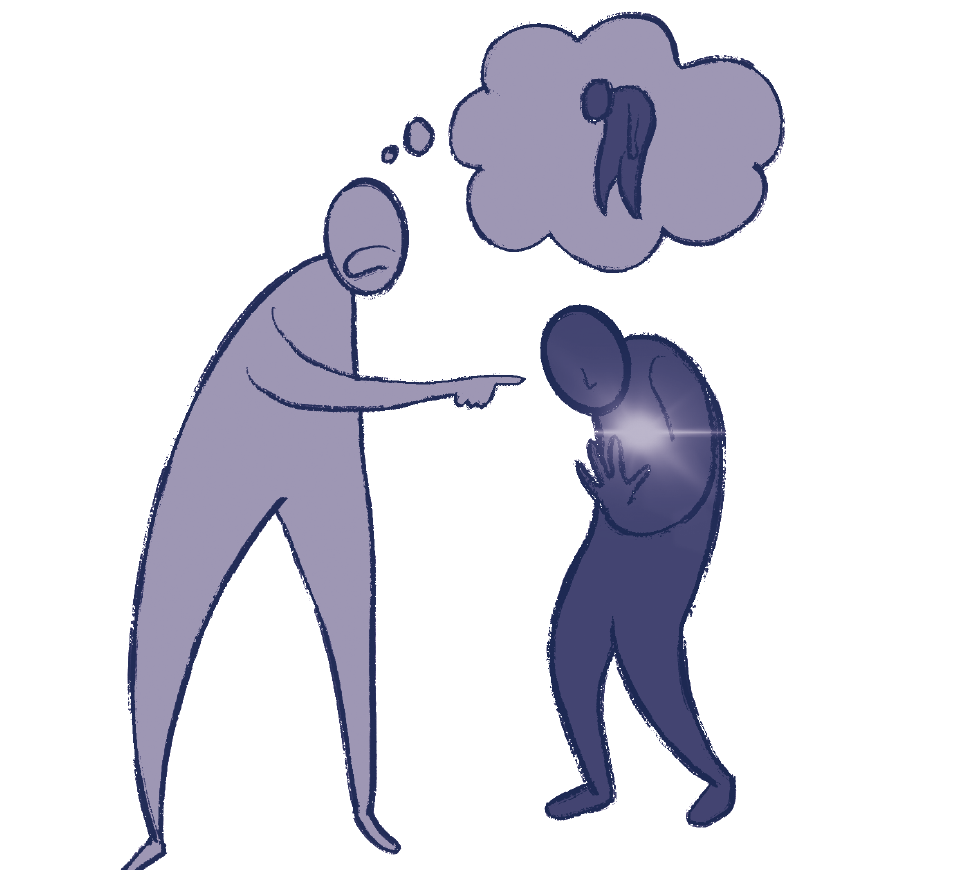
Our dominant dogmas encourage us to be individual hunters rather than interdependent human people, with the consequence that we meet ‘other hunters’ as lonely, isolated people. There are sometimes times in our lives when we are so low that we cannot even rival. We become resigned, accepting the demeaning looks people give us or imbibing the low opinions those around us might have about us, even sometimes believing that they are justified. Learning to trust ourselves and our abilities again, when people around us have diminished us.
Often this happens because ‘the other person’ is not very sure of their own position and is able to displace their uncertainties on to us. If we too are feeling uneasy or vulnerable, we become the receptacle for the insecurities of many others. Struggling against this by putting others down replicates the problem. Living in this dynamic, modern life can sometimes leave us in a very lonely and isolating place.
A Dynamic of Hope Opening up spaces between people to experience hope is especially relevant for many formal and informal educators as well as for people working with children, young people and adults who are very conscious of the rejections or judgements of others around them. Moving beyond the demeaning beliefs others sometimes place in us -that our lives are worthless, that we are incapable and weak, or that we are ‘problems’- can only happen when we come into relationships where we are welcome and do not need to defend ourselves!
When we experience being trusted, when we experience real belonging, we no longer live dominated by the rivalries with others who diminish us. We are more than the diminishing beliefs others express about us!
DH 3.2 WE ARE MORE THAN THE DEMEANING BELIEFS OTHERS HAVE OF US!
INVITATION
If you wish, please scribble some notes or write a diary note about how you have experienced “breaking free from people who diminished or demeaned you”.
REFLECT ON OUR OWN
Can you identify a relationship with a friend or friends or with a supportive adult or confidant, that prevented you from sinking too low as others put you down? It may be that you are still in such a relationship! If so take time to reflect on it. How important was, or perhaps still is, that relationship for you? OR Can you identify a person who might offer that relationship to you now?
Find Your Voice
What were you experiencing before you had the support and affirmation of this significant person or group of people? How did you experience their support? OR How might the person you identified meet with you and consider the experience you are having of being diminished?
Explore Your Reason
Looking back, what in your life allowed others to ‘invade’ or ‘diminish’ you? Looking back, what changed for you when you came into the orbit of those who supported you? OR Looking forward, what might change for you if you now had such a new more open and supportive relationship?
Examine Your Choice
Looking back, what choices did you take, to break free of being put down? What would you say to others in a similar situation? OR Looking forward, what choices would you wish to make now?
COLLABORATIVE ACTIVITY
If you are willing now, speak about the themes above with another person or in the group. Hearing your own voice and the voices of others, what are you now learning about the experience of breaking free of relationships where you felt or feel demeaned? How might we address these experiences-in schools; faith communities; homes; trade unions; businesses; workplaces; civil society? Looking back were there any responsible adults who could have been (could be) more accountable and responsible? What can people and groups and organisations do to promote a culture that stands against such demeaning actions?
Summary
It is our experience, that growth and strength begins when we know we matter in the eyes of others who matter to us. We become people of value, talent and ability again. We need relationships in which we experience that change is possible, and hope reappears. We are more than the diminishing beliefs others express about us! Is what you experienced negatively just to be put up with or can wider society do something about such demeaning behaviours?
There is a need to develop public and civic cultures that name behaviours that demean and diminish people. Such actions work best when they belong to a wider societal commitment to treat one another well, a comitment culture that values all people. Regretfully some actions, and some people, can only be challenged by good law and a public culture that establishes minimum standards of acceptable behaviour. It would be best to establish respectful cultures that work above and beyond any legally defined minimum standards.
We call this ‘building a commitment culture’. Ways of being with one another that are pro-active, above and beyond the important but minimum standards rightly established by the law.
DYNAMICS FOR HOPE 3.3 DH 3.3 “TOGETHER WE CAN DO MORE THAN ALONE WITH OUR INDIVIDUAL BELIEFS”
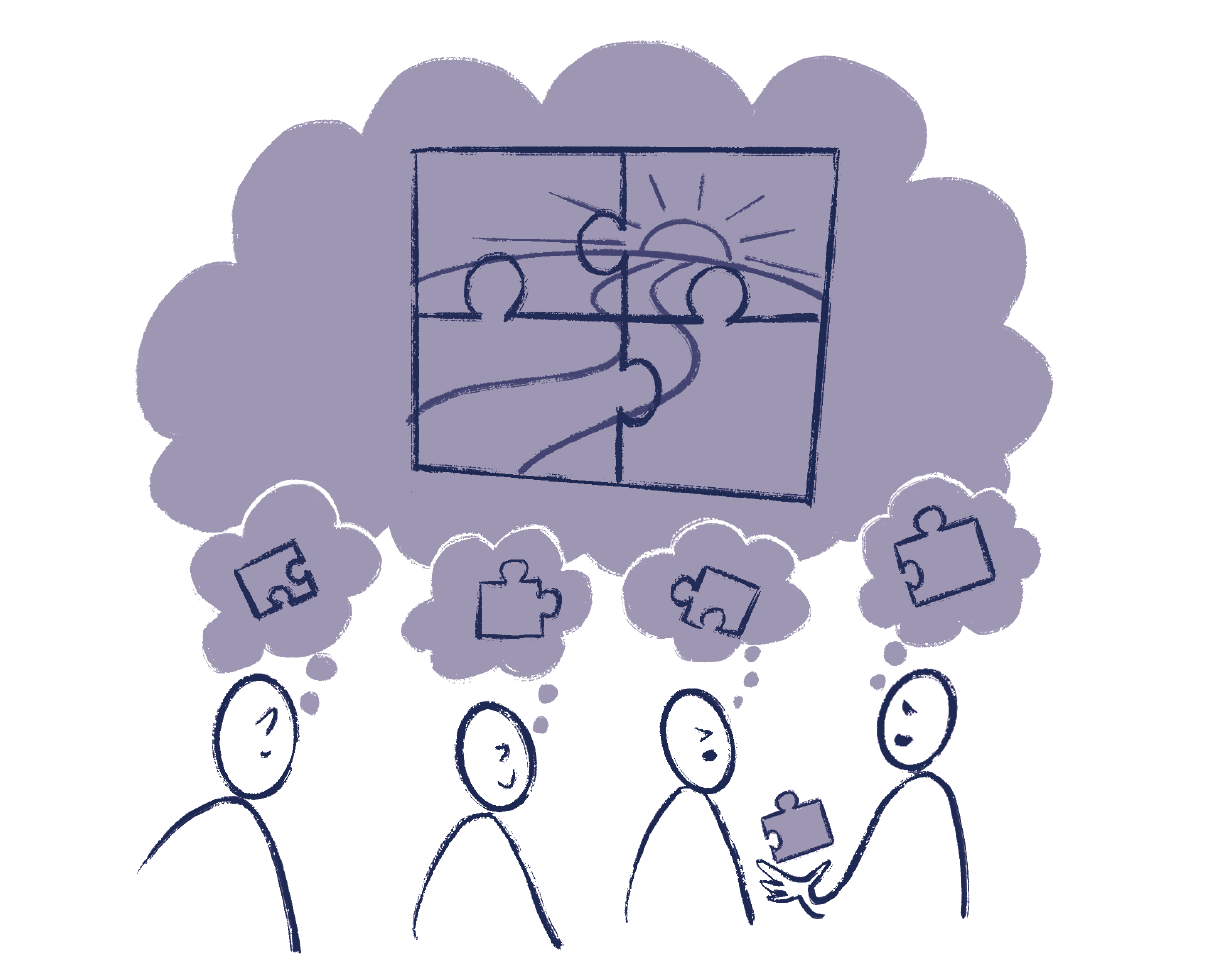
In relationships of trust and openness we learn, without knowing, that ‘together we can do more than alone with our individual beliefs’ . There are some people fortunate enough to have grown up in relationships that nurtured and nourished them. Love lasted longer than their mistakes! To forgive and be forgiven were lived realities in their lives. Nothing took away their sense of personhood. Still, sometimes, even some people formed in such an atmosphere can find themselves alone, or isolated.
So it is important that people nurture and sustain connectedness. Staying connected with people we trust is the ground on which we build our relationships, even when it appears impossible. Sometimes the task of reconciling, taking a risk with different others, can leave us alone and isolated! When we live in relationships of trust with others, each of us is free to do more. Together we can do more than we believed possible on our own.
In the face of fear, risk and even violence, “together we are more than our individual beliefs” sustains many involved in reconciliation practice such as in mediation, healing work, transformative education and community work practice. Together with others, we can be more than our individual aspirations and beliefs! Whether in conflict affected cultures and societies or more secure societies.
STORY AS ACTION, CREATING SPACE, BUILDING A NEW FUTURE TOGETHER
Please read the following true story Most people living in Northern Ireland went to, and currently go to, schoolsxxvi whose roots and governance has been associated with their historical links to religious and political traditionsxxvii. The Integrated School Movement developed in 1974 as a parent led expression wishing to create commonly owned integrated schools.
These schools were envisaged as integrating spaces in a society where so many educational spaces were, and still are, managed by Catholic or State (Protestant ethos) structuresxxviii. ” We came together, 12 adults wanting to create something different for our children. Coming from different backgrounds we wanted a school where parents from all traditions and none; from all social backgrounds, could send their children to.
We wanted a school that would also welcome those new people coming to live in Northern Ireland due to employment, a new life or a need for sanctuary. ” Do Gooders”-’ Hippies” were used by our critics but we quietly advocated for our hopes, and two years later took the risk to send our children to a new school, in an old house we had secured with charitable foundation support.
It took three more years to make the case, three years of vulnerability, three years of raising teachers salaries, three years where the teachers involved had to take the risk that if it failed they would, possibly, be ostracised from obtaining jobs elsewhere. Years later, educational policies changed and the school entered the wider system as a very diverse school in Northern Ireland terms, socio economically, culturally and religiously.
The mixture of voluntary energy, commitment and risk taking, bound group members together over five years. It took ten years in all to secure the school. The arguments, the tensions, the struggles we had, as a diverse group of people brought up within a borderland culture of separation, struggling with one another to become an integrated group were considerable, and yet the story between us grew.
The exhilaration, the passion, the joy as, step-by-step, achievement after small achievement, accumulated and a new, more open culture developed between us. Our children experienced being at ease with different others in a manner that their parents were only, in adulthood, experiencing. All parents, carers and children are assets; All parents, carers and children are important, whatever school systems they are part of. (see Mill Strand website.)
DH 3.3 “TOGETHER WE CAN DO MORE THAN ALONE WITH OUR INDIVIDUAL BELIEFS”
INVITATION
If you wish, please scribble some notes or write a diary note about your response to the stories above.
REFLECT ON YOUR OWN
Have you ever experienced being with a group of different others and there was an energy about you all? Anything seemed possible, in a sense? Hope is a thread that unites the daily actions of embracing, including, welcoming and holding one another as different people sharing one space, one town, one society, one world.
INVITATION
TO EXPLORE Think of all the places in your area where people meet together to pursue an activity? Look at the ease with which many staff in care homes or hospitals, apparently effortlessly, work with one another. When the people in such places work well together they multiply hope and possibilities to others around them.
REFLECT ON YOUR OWN
Find Your Voice
Recall a moment when you were able to do so much more because you were supported by different other people. Look around your area for the places and groups that exist now because some people, at an earlier time decided that, to do things well, people needed to come together. It is to know that our hope-filled small acts accumulate and are linked with many other people who dared to be hope filled. Thinking of the above school example: How do you respond to the school story? If you had been a member of this group, with your own children, what do you think would sustain you through the long times of voluntary effort demanded by such an initiative?
Explore Your Reason
Is it right that people challenge the ways the education system in their country is set up if they see it as increasing separation and division? OR Are such activities to try to do this not an additional burden on public funds?
People who wish separate education for their children argue that their culture has to be respected. Do they have a valid point? Imagine parents with these different views meeting together, what would you put in place to ensure they met together as parents, albeit with different views on the education system?
Examine Your Choice
In this modern world so many societies are becoming more diverse. Many people are more mobile seeking work; others are forced out of their countries of birth through massive cultures of violence; and others are seeking asylum and new opportunities for their children. Some people are resisting these changes, wanting to keep new people out. Where do you stand on these changes? What are you open to? Where are your limits to compassion, if any?
COLLABORATIVE ACTIVITY
If you are willing now, speak about the themes above with another person or in the group you are part of. Hearing your own voice, and the voices of others, what are you now learning about the significance of people, with a hope of a different future together, mobilising actions beyond their individual dreams? Is opening up the cultures of organisations to acknowledge minorities enough or do there need to be more fundamental changes that acknowledge and respect their different experiences and aspirations? What other examples of groups opening themselves to different others are you aware of? What elements have contributed to their success? If some have failed what elements got in the way?
Summary
Stories create events, events repeated make patterns, and patterns over time become new structures. Do you see these stages in practice here? (See DH:8 Events, Patterns, Structures and Norms) Are there any other projects you are aware of where these stages can be identified? In conflict affected cultures and societies, dominant interests can frustrate people who wish to create some new integrating actions and new, more inclusive, structures that last. Even individuals with a strong vision, nurtured in empowering family and friendship groups, can be readily marginalised. Finding others who share your vision together means that people can always do more together than apart.