Conflict-Affected Cultures and Societies
DC 7 Majorities Assume - Minorities Negotiate
How majorities often assume belonging while minorities must negotiate it.
Source: Nurturing Hope, Conflict-Affected Cultures and Societies, May 22 Final The Understanding Conflict Trust - Nurturing Hope - 4 Conflict Affected Cultures and Societies.pdf, pages 47-51
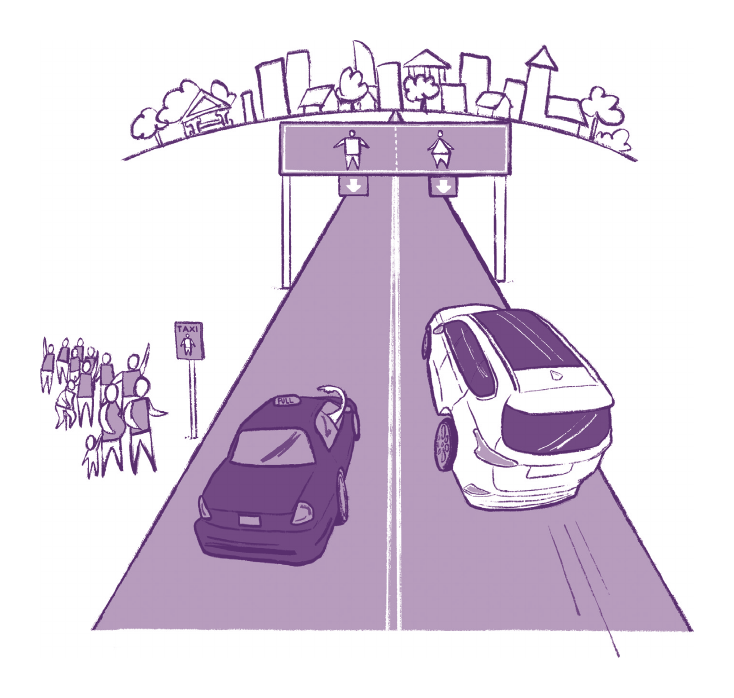
SOME DYNAMICS OF CONFLICT-AFFECTED CULTURES AND SOCIETIES 7 DC7: MAJORITIES ASSUME - MINORITIES NEGOTIATE
Majorities are often insensitive to their own position and to the voices of minorities. In organisations or societies that fail to treat all with respect, often majorities assume whereas minorities have to negotiate their place. When societies are built on the transcendent principle of all being equal citizens, the different talents and experiences members of diverse identity and cultural groups have the potential to enrich the society.
The restorative challenge each day is to promote and secure spaces and relationships where people experience being at ease with different others. Such relational work is made much easier when supported by wider institutional structures and policies that promote trust as a societal imperative. We have found it helpful to focus on equity, diversity and interdependence as fundamental institutional and social policy principles.
When public institutions embed a political culture focused on social and economic issues rather than identity politics, and secure more open and shared public spaces in cities, towns and villagesxviii, normal politics can work. (See earlier sections DC 4.4 and DH5) A society based on the primacy of the citizen rather than the group is characterised by:
-
An ease with difference.
-
The ‘good society’ and the ‘public good’ being a focus for civic and political discussion..
-
New forms of diverse citizen association being experienced.
-
Building a robust and open society beyond antagonism and asymmetry.xix
However, when there is a failure to offer equal citizenship and equal protection of rights and the law, people-especially those in a minority situation-feel forced to come together as a group. Identities become rallying points for protest and organisation. A divided politics of identities evolves, rather than a politics of equal citizenship.
Majorities often do not have to be conscious of their power and position. It is the way things are for them. However, members of minorities always have had to negotiate their way around so many others, especially those in the majority, every day. They are very aware of being a minority and excluded.
Numerical majorities moving through ‘their’ society, are always more in the company of people such as themselves. Minorities, if they even have the freedom to move about, are always aware of their minority status and have to continually negotiate with the majority dominated cultures.
DC 7: MAJORITIES ASSUME -MINORITIES NEGOTIATE
INVITATION
If you feel able to, please scribble some notes or write a longer diary type entry about your experience about being in the majority and in the minority.
REFLECT ON YOUR OWN
There are some people whose experience has never brought them into contact with a minority situation. It has been their experience to have been always in a majority. Often members of different minorities meet members of majority groups who simply do not believe their experience as a struggling minority! Reflect on any of the life experiences listed below and identify any experience where you experienced being a minority of any kind? Some of us will find this easy.
It may have been our experience to be: a minority in our family; a member of a group we belong to may have been institutionally marginalised over years. Such minority experiences may strengthen us in arguing for better treatment. Others may find this more difficult- we may have lived as a member of a minority but never spoken out, for different reasons. Whatever experience we have had, hold on to it for further reflection.
Find Your Voice
There is an important debate going on in many societies about the rights of people who are identified as minorities, or people who have been structurally discriminated against. In these learning sections we invite each of us to stay with our own experience and not drift into the wider, yet very important theme. Have you ever been in a situation where you were in a minority, ignored, and treated as being of no consequence? Are you currently recognised as being a member of a minority group? Have you been patronised? Recall your feelings at that time. What did you do? What do you wish you had done? OR Have you been with another person who has told you they do not feel equally treated in daily life?
Have you listened to a person speak about being a member of a minority identity group? How have you responded? OR Have you ever been in a situation where someone accused you of not being sensitive to their presence because you were a member of a majority tradition? OR Do you believe that everyone in your society is well treated and that no one is treated in a different manner because they are a minority? Looking back at whatever situation you have explored. How did you feel? How did you respond? Are you able to express your voice on what you have experienced? Or, do you remain quiet and perhaps even want to leave such situations?
Explore Your Reason
What reasons do you have for why people with minority experiences often have to fight with so much energy to be heard? How is it that so many powerful voices have often not been challenged in daily life? What reasons do you have to explain that in a supposedly citizen-based society, so many people still do not feel they are heard? What good reasons do you have for people from minority identities to be treated equally and equitably?
Examine Your Choice
How can a challenge by a citizen who feels they are treated as a minority be acknowledged and heard by members of a majority? What new or existing cultures or public norms, if any, support these challenges being made and heard respectfully?
COLLABORATIVE ACTIVITY
If you are willing now, speak about the themes above with another person or in the group of which you are a part. Hearing your own voice and the voices of others. Do you think it is easy to convince members of majority traditions and groups that minorities often have to negotiate with majorities about their place. Do you think majorities understand they often act as if they simply have a right to act as they wish? What form of relationships and cultures should be promoted in public and civic organisations? What laws or procedures are in place, or should be in place, to ensure a culture of equity?
Summary
The ‘public square’ in all societies has an important role to play, if it is valued and protected as a public and open space. The public square should be should be a place where, in a respectful atmosphere, diverse points of view and experience are shared, heard and negotiated. It should be a diverse space where contesting understandings and experiences are allowed their voice. xx Amartya Sen speaks of the public square being a place for reasoned public discourse.
The public square is a space that reinforces notions of fairness and justice and is a place where minority voices are respected, listened to and responded to. In a time when social media platforms encourage more strident statements, and people can choose to engage in fewer face-to-face relationships in which they can have respectful and robust public dialogues, minority or powerless voices often have to act more vociferously to be heard.
It is incumbent on all civil society organisations to highlight the need for more open relationships to be established within which a wider set of voices can be heard on all issues. This is especially when minorities have to negotiate so much with majorities who are, often, oblivious to their power.