Conflict-Affected Cultures and Societies
DC 10 Cultural Boundaries And Traitors
How strong cultural boundaries can mark open members as traitors.
Source: Nurturing Hope, Conflict-Affected Cultures and Societies, May 22 Final The Understanding Conflict Trust - Nurturing Hope - 4 Conflict Affected Cultures and Societies.pdf, pages 62-66
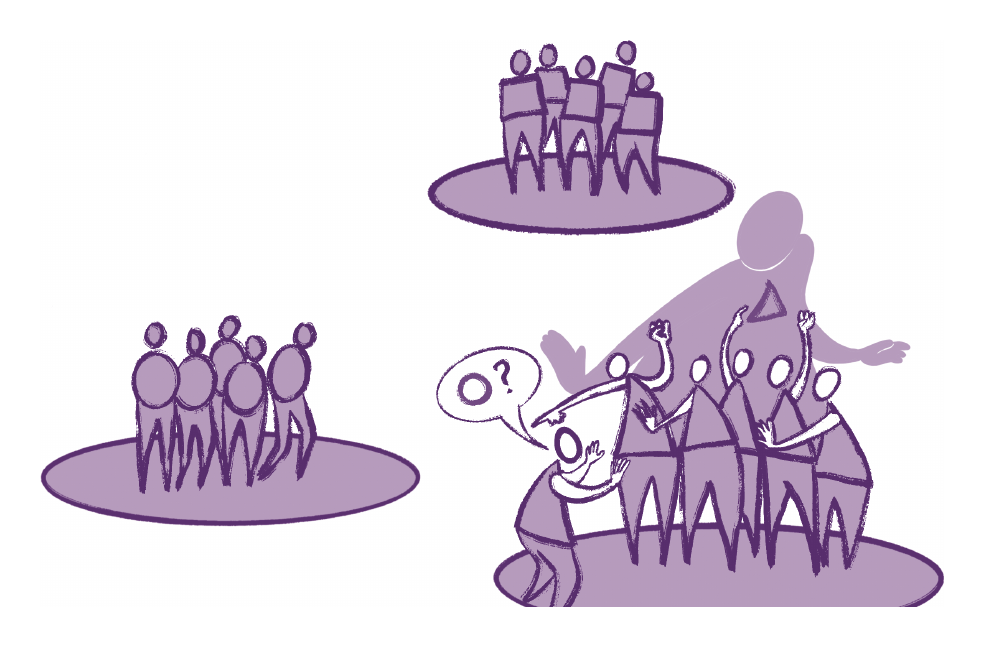
SOME DYNAMICS OF CONFLICT-AFFECTED CULTURES AND SOCIETIES 10 DC 10: CULTURAL BOUNDARIES AND TRAITORS
Boundaries are places where a knowledge of the different other is heightened. Boundaries are also places where histories of mixed relationships and marriages between cultures are often denied and hidden. Boundaries are ambivalent places- they are both places where the remit of the law runs and they are places where laws are frequently broken.
TRAITORS CAN BE EXPELLED—THE DIFFERENT ONE IS A THREAT TO OUR ORDER
In conflict-affected societies many communities are often exclusive, judgmental, partisan and closed. At the center of such strong cultures and identities most people can be very self-absorbed with all around them. Everyone there feels secure. It is more at the edges of cultures where the security of the centre can become a little less certain and where tensions or uncertainty might be evidenced. Some people on the emotional edge of strong cultures may not feel very secure or certain their identity is secure.
Also some people at the geographical edge of a culture, where one culture meets other cultures, often have the day-to- day experience of negotiating with difference. They always have to find ways to be in the midst of others, yet protecting their own identity. Others still, in this same place, may be more open to others and so are viewed as threats or traitors to their own cultural order. Those in the centre of the culture may feel it is better for these people to be expelled or isolated.
At the edge of belonging to a culture or not: Some people may have warm relationships with different others. Other people may have relationships with different others that challenge them or unnerve them. Others still may have family members and friends from within the other cultures, beyond the boundary, but feel unable to speak about this with those in the centre of their culture. Boundaries generate defenders.
Some defenders are people fiercely dedicated to the culture and living beside the physical boundaries or frontier posts. Others are defenders at the comfortable centre who, when things become uneasy or when politics demands, fly the flag for the people on the border! Understanding the power of these different triggers lessens our rush to pre-judgements. If we do not hold back, we can be continually driven into being prejudiced against people we have often not met or do not know well.
When we acknowledge that people may have good reasons to fear different others, we may gain some new insight into finding new ways forward with them or those like them. The temptation, out of our ‘cultural good reason’xxvii, is not to see the others as human beings like ourselves. We can easily justify our position as superior and the others as beneath us. Such actions merely continue the circles of misunderstanding and conflict.
DC 10: CULTURAL BOUNDARIES AND TRAITORS
INVITATION
If you feel able to, please scribble some notes about how this theme challenged you.
REFLECT ON YOUR OWN
Think about where you sit vis a vis a culture you strongly identify with. What elements of daily life cause you to hold this specific identity very close? OR If you do not feel a great sense of identity with a particular culture, think why this might be?
INVITATION
TO EXPLORE If we accept that we are members of ‘diverse diversities’, then can we still remain identified with one narrow definition of culture? (See Sen and Dynamic DC5) Some of us live in societies where we might not be able to exercise our choice to be part of some wider sense of belonging because the dynamics in our societies, understandably, cause us to be for one or other identity? OR We are fortunate enough to live in a place where specific singular identities are not what people are driven to hold on to and we can draw on the richness within diverse diversities!
REFLECT ON YOUR OWN
Find Your Voice
Imagine yourself getting ready to play a number of roles: Role 1: Imagine yourself in the role of being a designated leader of a strong identity culture? As tensions rise within your culture, and some feel it needs defended, what feelings and views would be developing within you? Role 2: What would you be thinking if you were only an ordinary member of a culture, wishing to get on with life and enjoy the cultural experience?
As tensions rise within your culture, and some feel it needs defended, what feelings and views would be developing within you? Role 3: What would you be thinking if you were only a nominal member of a culture? You know that there are other people, in other cultures, who feel similarly to you about their cultures. Like them, you belong in name only to your culture. You have some friends or acquaintances in other identity groups.
When you hear leaders in your culture argue that ‘people need to be prepared to defend our culture’ what is your response?
Explore Your Reason
Staying with these roles, in your life today what reasons would you put forward for:
-
The importance of belonging to a strong culture, a strong identity, a strong tradition?
-
Being a member of your culture yet open to others around you who were not.
-
Being more of a nominal member of your culture, open to different others in the modern world, where so many, including relatives of your own, have travelled elsewhere for work and have different friends?
Examine Your Choice
IMAGINE: You are deeply involved in many aspects of your culture and have no friendships outside it. How would you choose to act with people from other cultures living in your society who ask to be accepted and understood? IMAGINE: You are a faithful member of your culture or tradition yet have friends and relations with people associated with other cultures and traditions. When leaders of your tradition demand that all your folks stand together against the others, what would your choice be?
IMAGINE: You are a member of a culture or tradition but hold that membership lightly, even nominally. What would you do if your leaders called upon all to rally to the cause? IMAGINE: You are a nominal member of your culture and you are aware there are many people, from your tradition and others, who are vulnerable and poor. What would you do if your tradition argued for only ‘your poor and vulnerable’ to be looked after?
COLLABORATIVE ACTIVITY
If you are willing now, speak about the themes above with another person or in the group of which you are a part. Do you now understand why some people feel as deeply committed as they do to different identities and cultures? Can you understand why some people might call others traitors? Can you understand that some people just have more diverse connections and friendships and just cannot be so involved in one cultural identity?
Summary
Conflict-affected societies are uneasy places. Part of this unease is reflected in group boundaries and identities being strongly defended, within and without. Often cultural groups within such societies are intolerant of their members holding views different to the mainstream, identifying members adjudged ‘insincere’ as traitors! Alongside this, group membership has strong boundaries associated with it, boundaries that are heavily policed by loyal members.
Sectarian, racist, or ethnocentric statements and behaviours are features of many conflict-affected societies that need confronted. Such statements and behaviours demean and diminish fellow citizens. To try to secure the dominance of cultures through generating traitors and driving fellow human beings out is the ‘unwelcome gift’ of conflict- affected cultures and societies and is a vicious, violent circle.
In conflict-affected cultures and societies there is little priority given to maintaining relationships between different people holding different beliefs or positions. In such cultures and societies even some civil society groups no longer give a priority to holding a reasoned public discourse with different others to robustly debate opposed views.
If we are to nurture hope, it is very important that people, and the groups we belong to, reach out and seek renewed relationships across lines of difference and distrust. It is important that faith, cultural and civic groups prioritise promoting a civic culture in which people meet together for difficult conversations. We need to find new relationships, new ways to live together well with our differences. To fail in this task will ensure that we learn nothing new.
So many of us have been brought up in a world of cultural boundaries, of being either ‘in’ or ‘out’. While this is culturally understandable, it is no preparation for creating a more open, diverse and interdependent society and world. The invitation we all face is whether, and how, we can create more open and diverse ways of being at ease with one another, ways not dependent on establishing excluding boundaries and identifying traitors.