Conflict-Affected Cultures and Societies
DC 2 Identities Dominate - Social Issues Play Second Fiddle
How identity conflict can push shared social issues into the background.
Source: Nurturing Hope, Conflict-Affected Cultures and Societies, May 22 Final The Understanding Conflict Trust - Nurturing Hope - 4 Conflict Affected Cultures and Societies.pdf, pages 10-14
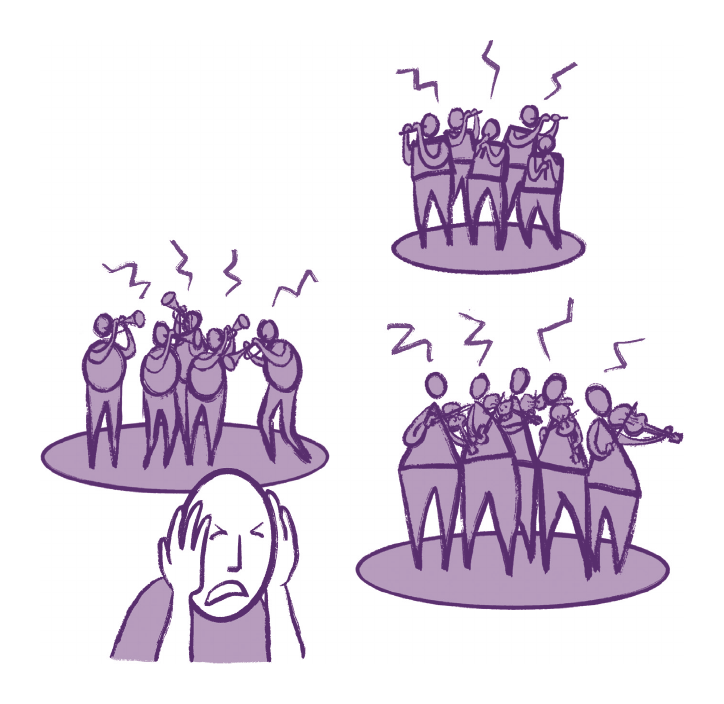
In conflict-affected societies, politics tends to be organised around competing group identities, not equal citizenship.
When the emotions and deeply held beliefs associated with opposed identities run high, differences of wealth and experiences of poverty between people within the same identity come, at best, ‘second fiddle’ to being a member of that identity group.
Our Side Before All Else
People within one identity group tend to align themselves with one another, no matter what the circumstances of their lives. In conflict-affected societies social policies tend to be poor because they are developed by identity politicians attending to the needs of their own identity group; ‘serving their own’ rather than the common good of all. Public discussion ceases to be about how the social well being of all members of society are cared for.
The Common Good Needs Established
All societies benefit when elected representatives, civil society groups and citizens, robustly debate how the common good of all in the society can be addressed and best provided for. These social issues cover welfare, health, education, criminal justice, employment and taxation, among others.
Conflict-affected areas are places too readily filled with the competing emotions associated with the diverse identities people have.
Within them, opposed political identities contest how the society moves forwardvii. The opposing political identities claimed by those who live there often harness particular political, religious or cultural traditions in their support.
People gravitate towards ‘their own’ identities in which they feel secure, with people who, it is assumed, have similar values and beliefs. These aspirations and identities become the lines along which political society is organised. They shape what political figures and parties represent and fight for.
Citizenship Is Not Shared In Common
In conflict-affected societies group identity often trumps individual citizenshipviii. The dominant voices and political positions are those that argue about which ‘national’ political, religious or cultural identity should have control.
When identities dominate so much of life, the politics shaping social policies in such regions tend to reflect the views of the dominant identity parties.
Identities ‘Apparently’ Nurture Trust Within Traditions And Foster Distrust Between Traditions
‘Trust your own’ becomes a mantra within identity groups when there is little or no trust, or a lack of open relationships with members of the opposed traditions. When mixed tradition meetings do take place, fear and a sense of mutual threat can dominate and deep emotions and historical memories are evoked.
In order to progress essential economic and other social transactions, cultural forms of avoidance and politeness are frequently adopted (See later model DC4).
“civility (can appear) as a screen between opposed views of the world in zones of contestationix”.
In Northern Ireland, the political parties that represent ‘identities’ are the DUP, UUP, TUV, and PUP (aligned with a pro-British identity), and the SDLP, Sinn Fein and some other small Republican groups (aligned with a pro-Irish identity) The Alliance Party, the Greens and some independents are not so aligned.
The Diverse Middle Is A Small Space
In the ethnic frontier of Northern Ireland or in the ideological frontier of Korea, as well as in other conflict affected societies such as the USA, ‘cross connecting’ parties and groups are often small, dwarfed by the parties representing the major opposing traditions. Those who claim they do not belong to the dominant parties have a limited voice and limited power or influence when fears are high.
When tensions are reduced there can be a small growth in parties taking the middle ‘shared future’ space.
Beyond Identity And Separate To Being All Together?
Conflict-affected societies really do challenge people and groups who want to hold on to a mental model of each person being a gift, especially those from an opposed tradition!
Identity politics frustrates those who see each person having ‘diverse diversities’. Conflict affected societies simplify and reduce people and fear and antagonism destroy the richness of different people being valued. Conflict-affected societies can be very harsh places in which to nurture hope.
The task in nurturing hope is how, and whether, people and groups from all identity backgrounds and none might be able to come together and work together in an open manner? Are they able to hear one another in a new manner around the social issues that impact the whole society?
The hope is that, for a while, it is possible to grow relationships and engagements between diverse people, beyond a narrow and excluding identity. In such a new space, people from very different backgrounds experience new relationships in which strong and robust discussion and argument takes place about the social issues impacting on all people, from all identities.Xii
INVITATION TO EXPLORE
If you feel able to, please scribble some notes or write a longer diary type entry about how this dynamic has impacted on you.
REFLECT ON YOUR OWN
Can you recall a moment where you aligned yourself with one group or tradition in opposition to another group or tradition?
IF ‘YES’ PROCEED TO INVITATION TO EXPLORE
IF ‘NO’, imagine a role-play situation where you joined one group or tradition opposed to another. Take time to get into that experience.
Invitation To Explore
Looking back to that real or imagined event, what were the wider influences that moved you to join or align with that group?
Did you even think about joining up or ‘did it just happen’?
What security or support did belonging appear to offer you?
Did you have any family or friends who also made that decision?
What did you talk about when you came together?
Did you have any family or friends who did not go in that direction but tried to stay clear of the different groups or traditions?
What did you say to them or was no communication possible?
Find Your Voice
Looking back were there others you knew or mixed with who were not part of this identity group?
What, if anything, was said between you when you met?
If you answered ‘no’ above, indicating that you did not join an identity group, what did it mean for your relationships with your family? Your friends? Your neighbours? People you knew in the identity group?
Explore Your Reason
Sometimes people are anxious or fearful in conflict-affected societies. Joining a strong group or a group that offers togetherness can make sense.
What ‘good reasons’ did the real or imagined identity group give you at that time?
Did you have any second thoughts once you had taken the step of joining?
What were the benefits of joining?
If joining up moved you to become more aligned with other family members, what benefits did you get?
If joining moved you away from the positions of some family members, what did the decision cost you in terms of friendship and support?
Examine Your Choice
From where you sit today, would you make the same decision again?
If you were seeking some support for your family, school, youth or community group today would membership of your identity group be helpful? If so, why?
Can each identity group arguing for its own people bring us closer to being a more open, shared society? If so, why?
Looking at the experiences above why is it so hard for people to give up their group identity?
COLLABORATIVE ACTIVITY
If you are willing now, speak about the above themes with another person or in the group you are part of.
Hearing your own voice and the voices of others, what are you now learning about relationships that give a priority to competing identities?
Hearing this, what are the choices you now want to consider making?
Summary
Each person has their own good reasons for who they identify with and why.
Some of us have family histories that are deeply invested in different identities and cultures and we do not wish to change that.
Others wish something different today and are keen to break old established ways, we want to have our own voice, express our own views and speak as individuals.
It is important to acknowledge that there are examples when leaders from opposed traditions have come together and acknowledged the needs of those from different identity traditions.
In conflict-affected societies, often education, health and social care are dealt with as identity issues rather than as societal issues. It is difficult to have discussions together about the common good.
However as tensions diminish and families from all identities encounter difficulties accessing health and social care, educational resources and securing, well-paid jobs, some opportunities evolve for people divided by identities to have a more open and engaged discussion, if they take the opportunity.
Given an historical background of division and limited opportunities for meeting together, it can often feel like starting from zero each time. Research shows that societies that inter-connect people from diverse social backgrounds and historical identities are more robust, safer and economically more progressive.xiii